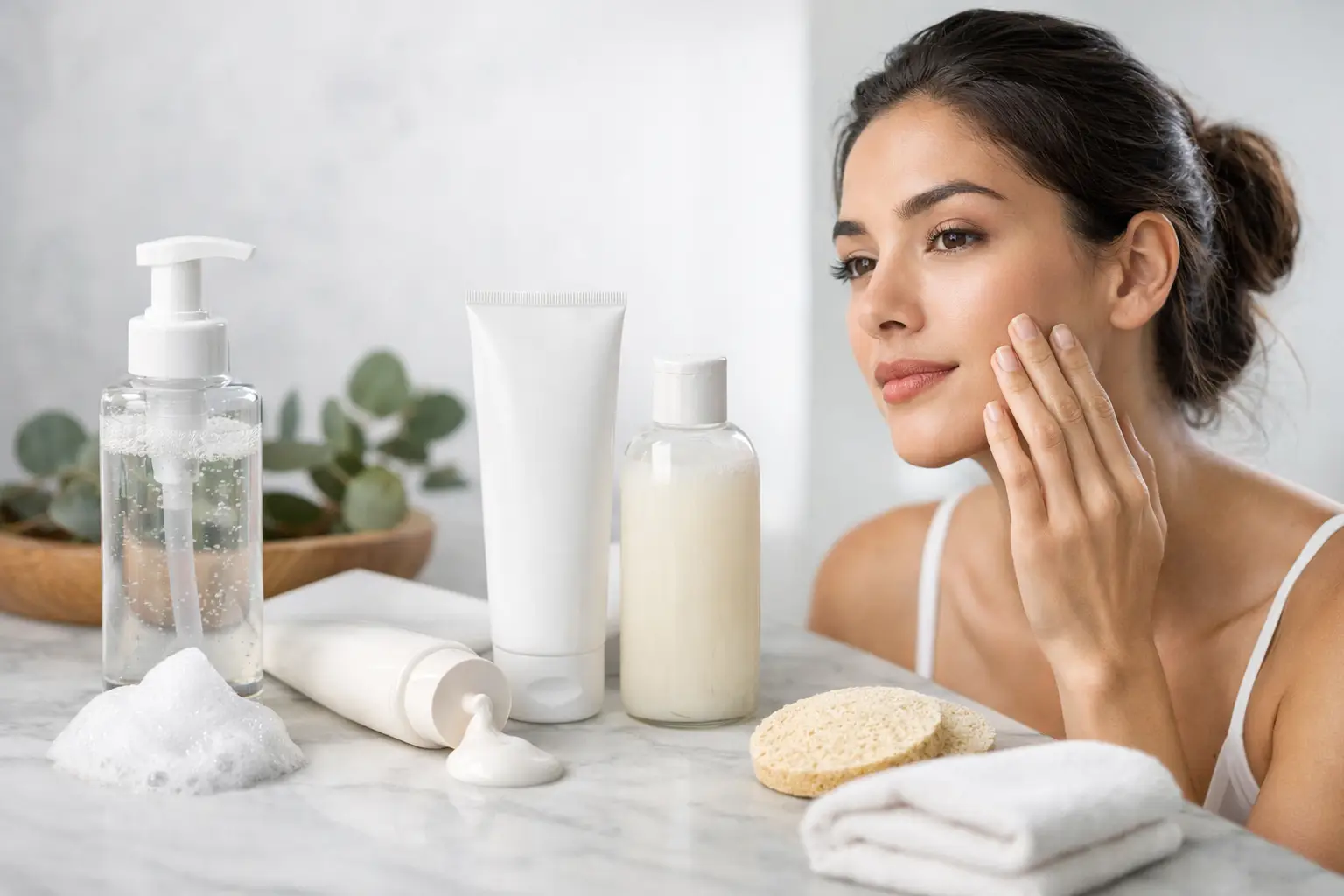

Your cleanser is the first product your skin meets each morning and the product that removes the day each evening. Knowing how to choose face cleanser can make the rest of your routine feel more effective: moisturiser sits better, treatment products are less likely to sting and your complexion feels clean without feeling stripped.
The best choice is not necessarily the strongest foaming wash or the most expensive bottle. It is the cleanser that removes sweat, excess oil, sunscreen, make-up and daily build-up while respecting your skin barrier. That balance matters whether you are shopping for a simple everyday staple or building a targeted routine for dullness, dark spots, dehydration or breakouts.
Start with how your skin feels after cleansing
Skin type is a useful starting point, but the way your face behaves after washing is often even more revealing. If your skin feels comfortable and soft after cleansing, your current formula may be a good match. If it feels tight, squeaky, itchy or looks red, the formula may be too drying, you may be washing too often, or the water may be too hot.
Oily skin usually becomes shiny through the T-zone and may be prone to congestion or blemishes. Dry skin can feel tight, rough or flaky, particularly around the cheeks and mouth. Combination skin often has an oilier forehead, nose and chin with drier cheeks. Sensitive skin may react to strong fragrance, scrubs, frequent exfoliation or certain active ingredients. Normal skin is generally balanced, although it can still become dehydrated in cold weather, heated rooms or after over-cleansing.
Skin can also change. A cleanser that worked brilliantly in summer may feel too cleansing in winter. Hormonal changes, acne treatments and retinoids can all make skin more reactive, so reassess your routine when your complexion starts asking for something different.
Choose face cleanser by skin type and concern
For dry or dehydrated skin
Look for a cream, milk, balm or gentle hydrating gel cleanser. These textures are designed to cleanse without leaving the skin feeling bare. Ingredients such as glycerin, hyaluronic acid, ceramides and soothing thermal water can help support a comfortable cleanse.
Avoid assuming that a cleanser must foam to work. A low-foam or non-foaming formula can remove everyday impurities very effectively and may be the better choice if your skin feels tight after washing. If you wear long-wear make-up or water-resistant sunscreen, use a cleansing oil or balm first, then follow with your gentle water-based cleanser.
For oily or blemish-prone skin
A gel or light foaming cleanser can be a practical choice for removing excess oil and daily build-up. The aim is a fresh finish, not an aggressively dry one. When oil is stripped too harshly, skin can feel uncomfortable and may produce more oil to compensate.
If blocked pores and breakouts are a concern, consider a cleanser with salicylic acid. This oil-soluble exfoliating ingredient can help clear pore congestion over time. Benzoyl peroxide washes can also suit some acne-prone routines, but they may be drying and can bleach towels or pillowcases. Start gradually, use a moisturiser afterwards and do not layer several strong acne products at once unless advised by a skincare professional.
For combination skin
Combination skin benefits from flexibility. A balanced gel cleanser is often enough for the whole face, especially if it does not leave your cheeks tight. If your skin is oily in the T-zone but dry elsewhere, resist the temptation to use a harsh cleanser everywhere just to control shine.
You can adjust with the products that stay on your skin: use a light moisturiser across the face, then add a richer cream only where you feel dry. This is usually simpler and kinder to the skin barrier than using separate cleansers on every area.
For sensitive or eczema-prone skin
Keep the formula uncomplicated. Choose fragrance-free options where possible and favour creamy, low-foam cleansers made for sensitive skin. Dermatologist-recognised brands can be a reassuring place to start, especially when your skin is prone to dryness, irritation or flare-ups.
A patch test is sensible when trying anything new. Apply a small amount to a discreet area for several days before using it across your face. If burning, swelling, persistent redness or a rash develops, stop using the product. Ongoing irritation deserves advice from a pharmacist, GP or dermatologist rather than more trial and error in your bathroom cabinet.
For dullness, uneven tone and dark spots
Cleansing sets the stage for brightening products, but it will not erase hyperpigmentation on its own. Choose a gentle formula that you can use consistently, then focus on leave-on treatments that suit your skin and daily SPF to help prevent marks from becoming darker.
Exfoliating cleansers containing mild AHAs or salicylic acid can add a little radiance for some people, but daily exfoliation is not automatically better. If you also use retinoids, vitamin C, fading treatments or spot treatments, a simple non-exfoliating cleanser may be the smarter partner. Visible results often come from consistency and restraint, not piling on more actives.
Match the texture to your routine
The format you enjoy using matters because a cleanser only works if you use it properly. Cleansing balms and oils are excellent at breaking down make-up, sunscreen and heavier complexion products. Massage onto dry skin first, then add water to emulsify before rinsing. They are particularly helpful in an evening double cleanse.
Micellar water offers a quick option for light make-up removal or a refresh when travelling. It can be convenient, but it may not remove heavy, water-resistant products as thoroughly as an oil, balm or dedicated make-up remover. Rinsing afterwards is often a good idea, particularly if your skin is sensitive.
Gel cleansers feel light and refreshing, which can suit oilier complexions. Cream cleansers offer more comfort for dry or sensitive skin. Foaming cleansers range from very gentle to quite intensive, so read the product description rather than judging only by bubbles. A bar cleanser can be perfectly suitable too, provided it is made for facial skin and does not leave you feeling dry.
Read the label with purpose
Ingredient lists can look intimidating, but you do not need to memorise every name. Start with the product’s stated skin type and benefit, then check whether the formula contains ingredients that align with your needs. Humectants such as glycerin draw in moisture. Ceramides support the skin barrier. Salicylic acid targets congestion. Niacinamide can be useful in many routines for its balancing and soothing qualities.
Be cautious with products that promise an intense clean, instant peeling or a tingling sensation as proof that they are working. Tingling is not a measure of quality, and a tight finish is not a sign of cleaner skin. Fragrance can make a routine feel luxurious, but fragrance-free may be the safer choice when your skin is reactive.
Price is not a verdict on performance. Trusted everyday brands can provide excellent cleansing, while premium formulas may offer a texture, sensory experience or specific ingredient combination you enjoy. The right cleanser is one that suits your skin, budget and replenishment routine, so you can use it generously and consistently.
Cleanse well without overdoing it
For most people, cleansing at night is non-negotiable because it removes sunscreen, make-up, pollution and the natural oils that accumulate through the day. In the morning, a gentle cleanse can be useful for oily skin, after a sweaty night or when using richer overnight products. Very dry or sensitive skin may prefer a splash of lukewarm water or a light cleanse in the morning instead.
Use lukewarm water, not hot water. Massage your cleanser with clean hands for around 30 to 60 seconds, paying attention to the hairline, sides of the nose and jawline. Rinse thoroughly, pat dry with a clean towel and apply moisturiser while your skin is still slightly damp. If you wear make-up or high-protection sunscreen, double cleansing in the evening can help, but it is not a rule every skin type needs every day.
A quick pre-purchase check
Before adding a cleanser to your basket, ask four questions: Does it suit my current skin type? Does it address my main concern without adding unnecessary irritation? Will it remove the products I wear each day? And can I afford to repurchase it consistently?
Lovely Aura makes it easier to compare familiar everyday essentials with specialist skincare, whether you are looking for a comforting cleanser, a blemish-focused formula or a reliable first step before your glow-enhancing routine. Give a new cleanser at least a couple of weeks of consistent use when appropriate, then let your skin’s comfort, clarity and balance guide your next choice.