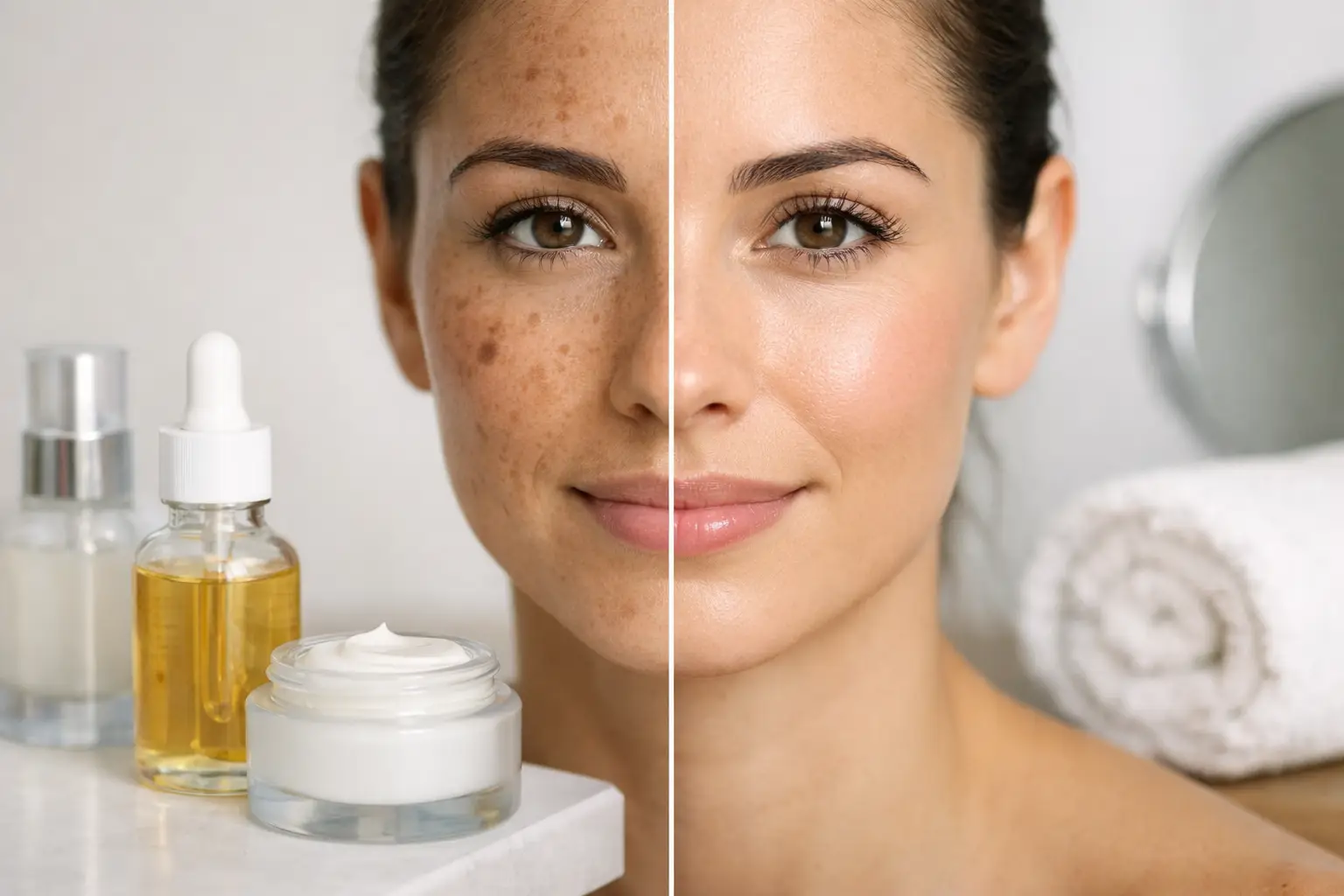

A convincing dark spot routine before after result is rarely about one dramatic product or an overnight change. It is the visible reward of treating skin consistently: protecting it from daylight, choosing targeted formulas carefully and giving your complexion enough time to renew. Whether your marks come from breakouts, sun exposure, irritation or hormonal changes, a thoughtful routine can help skin look clearer, brighter and more even.
The goal is not to erase your natural skin tone. It is to reduce the contrast between darker patches and the surrounding skin, so your complexion looks healthy, balanced and full of glow.
What a dark spot routine before after can realistically show
In the first few weeks, the most noticeable changes may be comfort and radiance rather than a complete fade. Skin can feel more hydrated, look less dull and apply makeup more smoothly. That matters, because dry or irritated skin often makes uneven tone appear more obvious.
At around six to eight weeks of daily use, newer post-blemish marks may begin to look less intense. Older, deeper spots often require several months. The timing depends on your skin tone, how long the marks have been present, the cause of pigmentation and, above all, whether you protect your skin from UV exposure every day.
A genuine before-and-after expectation is gradual improvement, not a lighter face after a few applications. If a product stings, causes peeling or leaves your skin looking inflamed, pushing through can create more pigmentation. Calm, consistent care is usually the more rewarding route.
Start by knowing what you are treating
Dark spots are a broad term. A small brown mark left after a spot is often post-inflammatory hyperpigmentation. Patches that return after sunny weather or hormonal changes may behave differently. Marks caused by friction, eczema flare-ups, harsh exfoliation or an unsuitable product also need a gentler approach.
This is why copying a complex routine from someone else can disappoint. A strong exfoliating treatment might suit oily, congestion-prone skin, while dry or sensitive skin may see better results from a barrier-supporting cleanser, hydrating serum and one measured brightening treatment.
If a patch is new, changing shape or colour, raised, painful or bleeding, seek advice from a healthcare professional rather than treating it as an ordinary dark spot.
The morning routine that protects your progress
Your morning routine does not need to fill the bathroom shelf. It needs to prevent existing marks from becoming darker while supporting a fresh, even-looking finish.
Begin with a gentle cleanser that removes overnight oil without leaving skin tight. Follow with a brightening serum or moisturiser containing ingredients such as niacinamide, vitamin C or azelaic acid, depending on what your skin tolerates. Niacinamide is a popular choice for those who want support for uneven tone alongside hydration and a stronger-looking skin barrier. Vitamin C can bring a more radiant appearance, though sensitive skin may prefer to introduce it slowly.
Finish with broad-spectrum SPF 30 or higher, every day. This is the step that can make or break a dark spot routine. UV exposure can deepen visible pigmentation even on overcast British days, and daylight through windows can still be relevant when you spend long periods near one. Apply generously to the face, neck and any exposed areas with marks, then reapply when you are outdoors for extended periods.
Without daily sun protection, expensive brightening products may feel as though they have stopped working because new pigment is continually being encouraged.
Your evening routine for targeted care
Evening is the ideal time to use treatments that support skin renewal. Cleanse away sunscreen, makeup and the day’s buildup, then apply one focused treatment rather than layering several powerful actives at once.
Retinoids can be a valuable option for some people because they support a smoother, more refined-looking complexion over time. They can also cause dryness or irritation, particularly at the beginning. Start two evenings a week, use a pea-sized amount on dry skin and follow with moisturiser. Retinoids are not suitable for everyone, including during pregnancy or breastfeeding, so take professional advice where appropriate.
Exfoliating acids, such as AHAs, can help improve the look of dullness and surface unevenness, but more is not better. Use them on separate nights from a retinoid at first. If your skin feels sore, flaky or unusually sensitive, pause active treatments and focus on moisturiser until it settles.
For a simpler routine, choose a targeted fade cream or brightening serum and apply it consistently as directed. Specialist ranges designed for tone correction can be useful when you want a more focused option, but the formula should still suit your skin type. Lovely Aura brings together everyday skincare and targeted dark-spot care, making it easier to build a routine around both results and comfort.
Build your routine without overloading your skin
The temptation to combine a scrub, acid toner, retinoid, vitamin C serum and fade cream is understandable when you want visible change quickly. Yet irritation is one of the most common reasons dark marks linger. If the skin barrier becomes compromised, inflammation can trigger further uneven tone.
Instead, introduce one new active product at a time and use it for two to three weeks before adding another. Patch test when trying a new formula, especially if your skin is eczema-prone or reactive. Keep the rest of the routine simple: gentle cleansing, moisture and sunscreen.
A practical weekly rhythm may be brightening care in the morning, a retinoid on two evenings, a mild exfoliant on one separate evening and recovery-focused moisturising on the remaining nights. It is only a starting point. Oily skin may cope with more frequent actives, while dry, mature or sensitive skin may do best with fewer treatment nights and richer hydration.
How to take useful before-and-after photos
Photos can show progress that is difficult to notice in the mirror, but only if the conditions are similar. Take your first image before starting treatment, then repeat it every four weeks. Use the same spot near a window, similar time of day, no filter and no flash if possible. Keep your hair away from the face and take one image facing forward, plus each side.
Avoid judging progress after a single breakout or a poor night’s sleep. Look for broader signs: are spots softer at the edges, less dark against your natural tone or easier to cover with less base makeup? Is your skin texture calmer and more luminous? These changes are often meaningful before a mark has completely faded.
Common reasons results stall
The most frequent issue is inconsistent SPF. Skipping it on cloudy days, using too little or forgetting the neck and chest can undermine treatment. Picking spots is another setback, as fresh inflammation can leave a new mark exactly where the previous one was fading.
Over-exfoliation also slows progress. A rough scrub or daily acid treatment can make skin look temporarily polished, then leave it irritated and uneven. Fragranced products are not automatically a problem, but if you know your skin reacts to fragrance, choose gentler options around treatment areas.
Finally, review your timeline. A mark that has been present for years will not behave like a recent post-blemish mark. Keep your expectations realistic, and consider professional dermatological advice for persistent or extensive pigmentation.
Give your glow a fair chance
The most effective routine is the one you can use comfortably every day. Choose trusted products that fit your budget, apply sunscreen with the same care as your favourite moisturiser and take progress photos monthly rather than searching for instant change. With patience, your before-and-after story can become less about chasing perfection and more about skin that looks clearer, cared for and confidently yours.