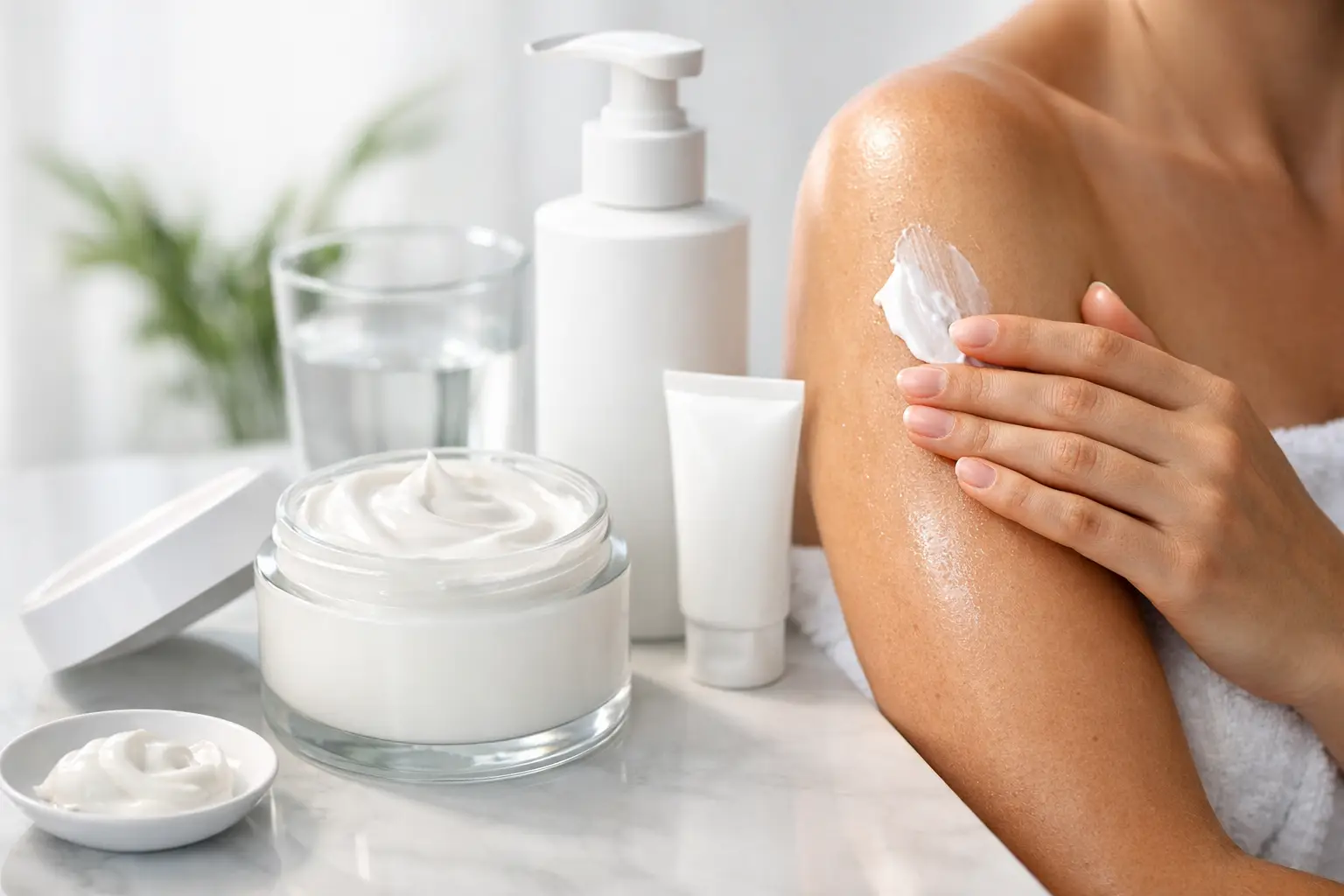

Your skin can feel tight straight after a shower, look dull beneath your favourite body oil, or suddenly make your usual lotion feel like it has disappeared. These are familiar signs that your body skin needs more water, more comfort, or both. The best body creams for dehydration do more than leave a temporary silky finish: they help skin hold on to moisture while supporting the barrier that keeps it feeling soft and looking healthy.
Dehydrated body skin is not reserved for winter. Central heating, long hot showers, air travel, exfoliating acids, fragranced wash products and even a change in weather can leave skin feeling thirsty at any time of year. The good news is that a well-chosen cream and a simple application habit can make a visible difference without overcomplicating your routine.
What dehydration looks like on body skin
Dehydration means the skin is short of water. It can affect every skin type, including oily or blemish-prone skin, and it is not exactly the same as dryness. Dry skin tends to lack the natural oils and lipids that give the barrier flexibility. Dehydrated skin lacks water. In reality, many people experience both at once, particularly on the legs, hands, elbows, knees and chest.
Look for skin that feels tight or uncomfortable after cleansing, has a papery texture, shows fine surface lines, or looks less luminous than usual. You may also notice that perfume or body care products sting when they normally do not. If your skin is flaky, rough or itchy as well, choose a richer formula designed to support a dry skin barrier rather than relying on a lightweight lotion alone.
Persistent itching, cracked skin, swelling or a widespread rash deserves advice from a pharmacist, GP or dermatologist. A body cream is a valuable daily step, but it is not a substitute for medical care when a skin condition is active.
The best body creams for dehydration: what to look for
The label matters more than a glamorous texture. A cream for dehydrated skin should combine humectants, emollients and occlusives, because each does a different job.
Humectants, such as glycerin, hyaluronic acid, urea and aloe, draw water into the upper layers of skin. Glycerin is a particularly dependable everyday choice and appears in many accessible, dermatologist-recognised formulas. Hyaluronic acid can give skin a plumper, fresher-looking finish, though it works best when applied to slightly damp skin and followed with a cream that helps seal in moisture.
Emollients soften rough areas and improve the feel of the skin. Shea butter, squalane, ceramides, fatty acids and plant oils sit in this group. They are especially useful when dehydration comes with roughness on the shins, arms or elbows.
Occlusive ingredients reduce water loss from the skin’s surface. Petrolatum, dimethicone and richer butters are effective choices for very dry patches. They can feel heavier, so they often suit an evening routine or the coldest months. If you dislike a rich finish, use a lighter hydrating cream over your whole body and reserve a balm-like product for hands, feet, knees and elbows.
Fragrance is a personal choice, not an automatic problem. A beautifully scented cream can make body care feel more indulgent, but sensitive, irritated or eczema-prone skin may prefer a fragrance-free option. When your skin is compromised, less is often more.
Choose the right texture for your routine
A cream only helps if you enjoy using it consistently. Texture should match both your skin and your lifestyle.
Lightweight creams for daily hydration
A fast-absorbing cream with glycerin, hyaluronic acid or aloe is ideal if you dress straight after showering or prefer a clean finish. This type of formula suits normal, combination or mildly dehydrated body skin, particularly during warmer weather. It can also be a smart choice for the chest and back if you are prone to body breakouts and want hydration without a heavy layer.
The trade-off is simple: lightweight creams may not be enough for very dry lower legs or hands. You may need to reapply or layer a richer product where your skin feels most uncomfortable.
Ceramide creams for a weakened skin barrier
When skin feels tight, sensitive and repeatedly dry despite moisturising, look for creams containing ceramides and other barrier-supporting lipids. Ceramides are naturally present in the skin and help it retain moisture more effectively. Products from dermatologist-recognised skincare brands such as La Roche-Posay and Bioderma are often a strong place to start when your priority is gentle, targeted hydration.
These creams are usually practical rather than perfume-led. That is a benefit if your skin reacts easily, though shoppers who want a strong fragrance experience may prefer to use perfume separately once the cream has settled.
Urea creams for rough, thirsty areas
Urea is one of the most useful ingredients for skin that is both dehydrated and rough. At lower levels, it attracts water; at higher levels, it can also help soften thickened, flaky skin. A urea body cream is particularly helpful for knees, elbows, feet and the bumpy texture some people notice on the backs of their arms.
Start carefully if your skin is sore or freshly shaved, as urea can tingle on compromised skin. It is often best applied at night, then followed by socks for an intensive foot treatment.
Rich body butters for overnight comfort
For skin that feels dry from shoulder to ankle, a richer body butter can bring the comfort factor. Shea butter, cocoa butter and nourishing oils create a cushiony finish that is especially welcome in cold weather or after a long bath. This is the texture to choose when you wake with dry-looking legs despite moisturising the day before.
Richer does not always mean better for everyone. If you prefer a lighter feel, apply a small amount to damp skin rather than a large amount to dry skin. You will often get the same soft finish with less product and less residue on clothes or bedding.
Sensitive-skin creams for reactive moments
If skin becomes red, itchy or stings easily, keep the formula calm. Choose a fragrance-free cream with glycerin, ceramides, panthenol or colloidal oatmeal, and avoid scrubs or strong body acids until comfort returns. This is also a sensible approach after sun exposure, hair removal or periods when you have been using very hot water.
Patch test a new product on a small area first, especially if you have a history of sensitivity. A cream can be popular and beautifully formulated yet still not suit your individual skin.
How to make body cream work harder
The timing of application changes the result. Apply your cream within a few minutes of stepping out of the shower, while skin is still slightly damp. Do not rub yourself completely dry first. Gently pat away excess water, then smooth the cream over the body in broad strokes. This gives humectant ingredients water to work with and helps reduce moisture loss.
Keep shower water warm rather than hot, and use a gentle body wash on areas that need cleansing. Over-cleansing the legs, arms and torso can strip the skin and make your cream work harder. If you enjoy exfoliation, limit stronger acids or grainy scrubs to once or twice a week and pause them if your skin feels tender.
For a more intensive routine, use a hydrating cream all over after bathing, then add a richer balm to your driest zones. Hands benefit from reapplication after washing, while feet respond well to a generous layer before bed. Consistency beats using the most expensive cream once a fortnight.
Build a body-care wardrobe, not a one-product routine
There is no single winner for every person because dehydration can be mild, seasonal, sensitivity-led or paired with genuine dryness. A lightweight glycerin cream may be perfect for morning use, while a ceramide-rich or butter-based formula earns its place at night. Keeping two textures on hand lets you care for your skin according to the day rather than forcing one product to do every job.
Lovely Aura brings together familiar everyday body-care names and specialist skincare brands, making it easier to compare formulas by concern, texture and budget. Start with the ingredients your skin needs, then choose a finish you will look forward to applying. Your softest, most comfortable-looking skin usually begins with that small post-shower moment you actually keep.