
A foundation can look beautiful in the bottle yet feel disappointing once it settles into fine lines, catches on dry patches or turns dull by lunchtime. If you are asking what foundation suits mature skin, the answer is rarely the fullest coverage or the most heavily powdered finish. The most flattering choice usually combines comfortable hydration, flexible coverage and a natural-looking glow that lets skin still look like skin.
Mature skin is not one single skin type. It may be dry, oily through the T-zone, sensitive, dehydrated, prone to uneven tone or affected by dark spots. The right foundation should work with those needs, not try to mask them under a thick layer. A few smart choices in formula, shade and application can create a polished complexion that feels as good as it looks.
What foundation suits mature skin best?
For many people, a lightweight liquid foundation with a radiant, satin or natural finish is the most reliable option. These formulas tend to move more comfortably with the skin and are less likely to emphasise texture than very matte, powder-heavy bases. Look for words such as hydrating, luminous, serum-infused, moisturising, natural finish and buildable coverage when comparing products.
A satin finish is often the sweet spot. It gives the complexion a healthy softness without looking overly shiny, while providing enough coverage to even out redness, pigmentation and dullness. A radiant foundation can be especially flattering on drier skin, but it may need a little strategic powder around the nose, chin or forehead if you prefer a more balanced finish.
The best level of coverage depends on your skin concern. Light-to-medium coverage suits those who want a fresh, everyday complexion with freckles and natural skin still visible. Medium, buildable coverage is a versatile choice for uneven tone and dark spots because you can add product only where it is needed. Full coverage can work too, but choose a fluid, flexible formula and apply it in very thin layers. A heavy first layer is much more likely to settle into lines.
Start with skincare, not more foundation
Foundation performs best on skin that has been prepared for it. Dehydration is one of the biggest reasons base makeup can look textured, even on skin that becomes oily later in the day. When skin lacks water and comfort, foundation may cling around the mouth, cheeks and eye area.
Cleanse gently, then apply a moisturiser that suits your skin type and allow it a few minutes to settle. If your skin looks dull or feels tight, a hydrating serum beneath moisturiser can make a noticeable difference to how smoothly makeup applies. In the daytime, finish your routine with SPF and give it time to form an even layer before reaching for foundation.
Primer is optional, not compulsory. A hydrating primer can be useful where skin feels dry, while a smoothing primer may help around enlarged pores. Avoid layering several rich products underneath your base, however. Too much skincare can make foundation slip, separate or gather in expression lines. The goal is comfortable, balanced skin rather than a thick canvas.
Match your base products carefully
If your foundation is water-based, it often sits most happily over water-based skincare and primer. Silicone-based formulas can give a smooth, blurred look, but they may pill if applied over incompatible layers or if products have not settled. This does not mean one type is automatically better. It simply means fewer layers and a little patience can produce a cleaner result.
Finishes that can be less forgiving
Very matte foundations are not forbidden for mature skin, particularly if you have oiliness or prefer a velvet complexion. The trade-off is that a dry matte formula can make fine lines, flaky areas and loss of radiance more noticeable. If you love a matte finish, choose one described as comfortable or soft matte, prep with hydration and keep powder to a minimum.
Pressed and loose powder foundations can be convenient for quick touch-ups, but they are more likely to sit visibly on dry or textured areas. They tend to work better as a light finishing product through the T-zone than as a full base for skin that is dry or dehydrated. Cream foundations and tinted moisturisers, on the other hand, can feel beautifully comfortable but may need concealer where you want more coverage.
Shimmer is another area where placement matters. A foundation with subtle luminosity can create a healthy-looking glow. Large reflective particles or a very frosted finish can draw attention to texture, especially on the cheeks. Choose a refined radiance rather than obvious sparkle for the most polished result.
Choose the right shade and undertone
A foundation can have the perfect formula and still look unflattering if the shade is too light, too dark or the wrong undertone. Mature skin can sometimes appear warmer or more uneven over time, especially where there is pigmentation, so avoid matching to the centre of the face alone. Compare shades along the jawline and allow them to settle for a few minutes before deciding.
Your undertone is the consistent hue beneath the surface of your skin. It may be cool with pink or rosy tones, warm with golden tones, neutral, or olive. A neutral foundation is often a useful starting point if you find both pink and golden shades look slightly off. The right match should blend into the neck and upper chest without leaving a visible line.
Do not choose a darker shade to create warmth. It can quickly make the complexion look flat or unnatural. Match your skin first, then bring dimension back with a soft bronzer, a cream blush or a touch of subtle highlighter placed above the cheekbones. Cream formulas are often easier to blend over mature skin than dry powders.
Application makes a visible difference
The amount of foundation matters as much as the formula. Start with a small pump or a few dots at the centre of the face, where most people want the greatest coverage, then blend outward. This keeps the edges of the face lighter and more natural.
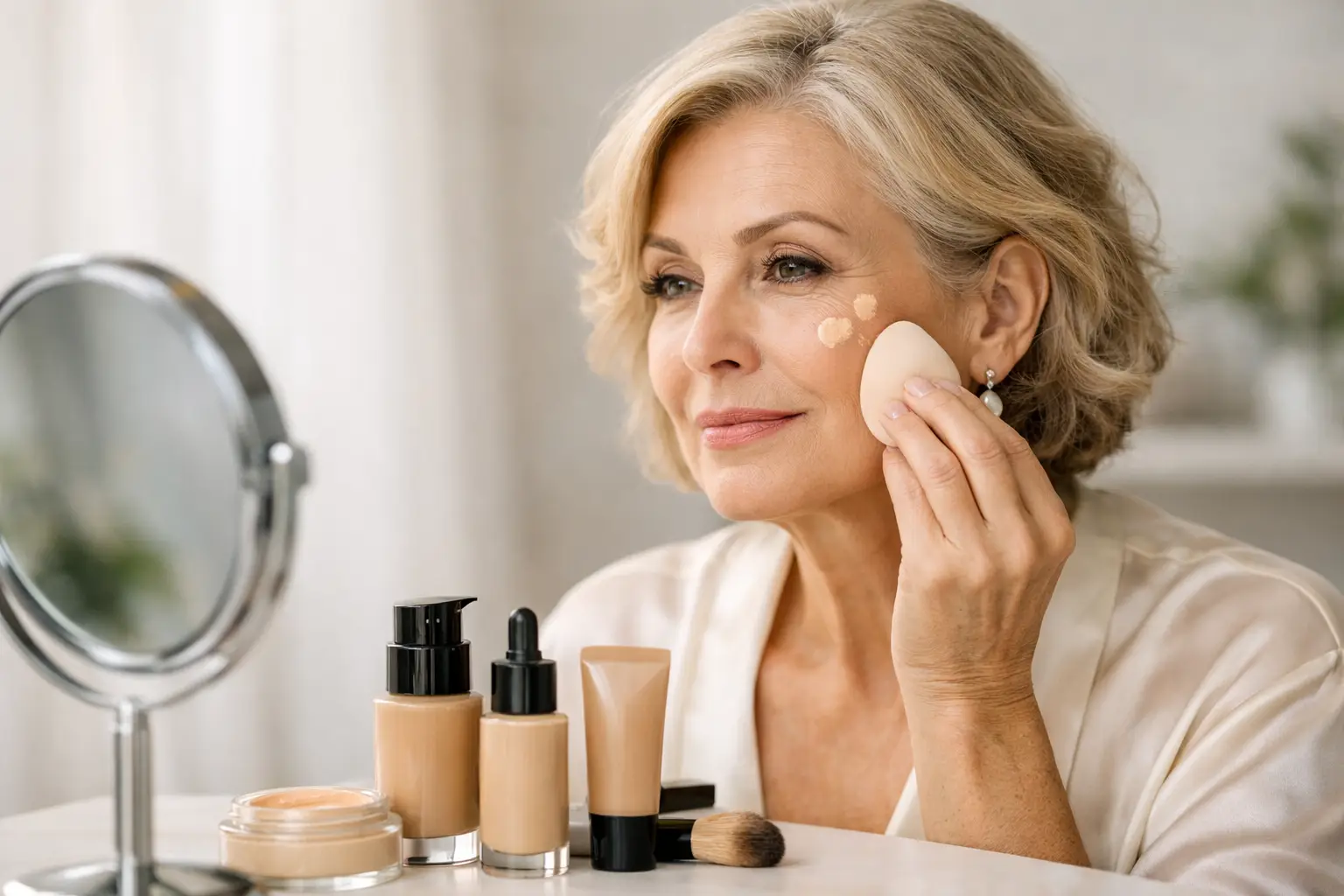
A damp makeup sponge is excellent for pressing foundation into the skin and softening any excess product. A dense foundation brush can offer more coverage, particularly around pigmentation, but use light buffing motions rather than dragging. Clean fingertips can also work well with creamy formulas, as warmth helps the product melt into the complexion.
Instead of adding more foundation over every mark, use a creamy concealer only where it will make a difference, such as around the nose, on a dark spot or beneath the eyes. Keep the eye area especially light. Too much product beneath the eyes can crease and make the area look less fresh, no matter how good the formula is.
Set only where you need it
If you like your makeup to last, use a small amount of finely milled loose or pressed powder on areas that become shiny. The sides of the nose, centre of the forehead and chin are common choices. Leave the high points of the cheeks with their natural finish so the complexion retains dimension.
A hydrating setting spray can help take away any powdery appearance and bring the layers together. Pressing, rather than rubbing, with a sponge after spray can also help foundation look more skin-like.
Foundation shopping checklist for mature skin
When browsing foundation, focus on the finish and comfort claims before being drawn in by a dramatic coverage promise. A good formula for mature skin will often offer a natural, satin or radiant finish, buildable rather than instantly heavy coverage, and ingredients or claims that support moisture and comfortable wear.
Test wear is valuable whenever possible. Check the foundation in daylight, then look again after several hours. Does it stay even around the mouth and nose? Does it feel tight? Does it become too shiny, or does it retain a believable skin finish? The best foundation is the one that continues to look flattering during your actual day, not just in the first five minutes after application.
Lovely Aura makes it easier to build a routine around your preferred finish, with trusted makeup and skincare brands to suit everyday beauty, special occasions and targeted concerns. Pairing a complexion product with nourishing skincare can help your base look fresher from the first application.
Your foundation does not need to erase every line, freckle or mark to look polished. Choose a formula that brings evenness and comfort, apply it lightly, and let your natural radiance remain part of the finished look.