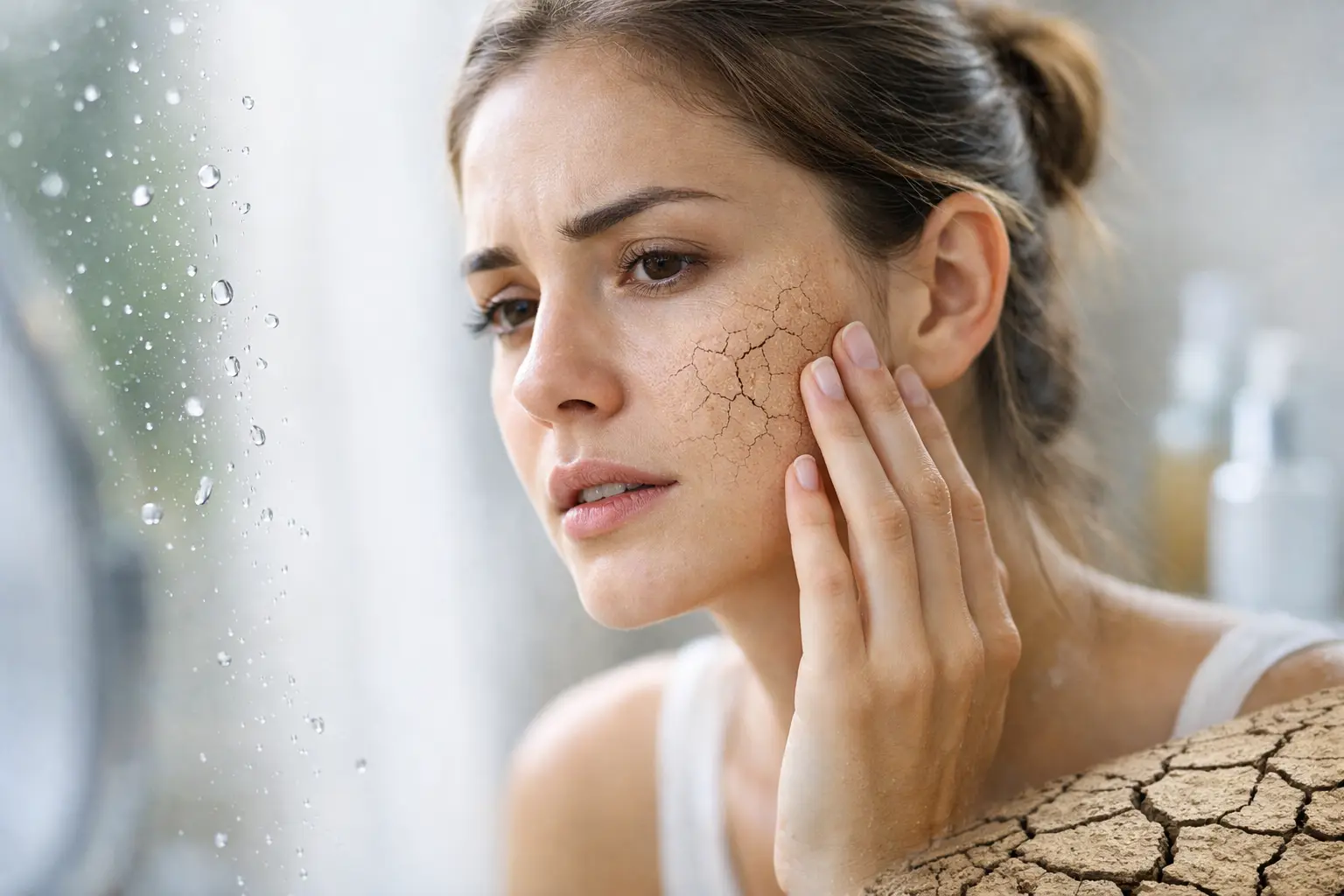

Your skin can feel tight by midday, look flat under makeup, and suddenly seem more reactive than usual – even if you are using rich creams. That is often the moment people start asking what causes dehydrated skin, because the issue is not always a lack of oil. Very often, it is a lack of water.
Dehydrated skin is a skin condition rather than a fixed skin type. That means oily, combination, normal and dry skin can all become dehydrated. You might notice fine lines appearing more clearly, a rougher texture, dullness, or that uncomfortable stretched feeling after cleansing. For many people, it is frustrating because the skin can look shiny and still feel parched at the same time.
What causes dehydrated skin in the first place?
At its core, dehydrated skin happens when your skin loses more water than it can hold on to. Healthy skin relies on a strong barrier to keep moisture in and outside stressors out. When that barrier is weakened, water escapes more easily, leaving skin looking tired, feeling uncomfortable, and often behaving unpredictably.
This is where people get confused. Dry skin lacks oil, while dehydrated skin lacks water. You can absolutely have both, but they are not the same thing. If your complexion feels greasy yet tight, or if your foundation clings to patches even though you are producing oil, dehydration is a likely factor.
A big cause is over-cleansing. Using harsh face washes, cleansing too often, or washing with very hot water can strip the skin surface and disturb its natural balance. Foaming cleansers are not always the problem, but if your skin squeaks afterwards, that is usually not a good sign. Clean should feel fresh, not raw.
Another common trigger is overusing strong active ingredients. Acids, retinoids, benzoyl peroxide and some exfoliating toners can deliver excellent results when used well, but too much too quickly can leave skin compromised. This is especially common when people layer multiple treatment products hoping for faster results. More is not always better in skincare, and dehydrated skin often proves that point quickly.
Everyday habits that quietly dehydrate skin
Weather plays a bigger role than many people realise. Cold air, wind and indoor heating can all reduce moisture levels in the skin. Summer is not always safer either. Sun exposure, air conditioning and frequent travel can leave the complexion looking flat and thirsty.
Long hot showers may feel luxurious, but they can contribute to dehydration, especially if your skin already leans sensitive. The same goes for fragranced body products or facial cleansers that leave a lingering stripped feeling. If your skin becomes red, tight or itchy straight after washing, your routine may be working against you.
Lifestyle matters as well, although skincare still does a lot of the heavy lifting. Not drinking enough water, poor sleep, stress and too much alcohol can affect how fresh and balanced your skin looks. None of these factors work in isolation, but together they can make dehydration harder to correct.
Even makeup can highlight the issue. Matte formulas, long-wear foundations and powder-heavy routines tend to cling more obviously to dehydrated patches. That does not mean you need to give them up completely, but it may mean your skin prep needs more attention.
Why oily skin can still be dehydrated
One of the biggest skincare myths is that oil equals hydration. It does not. Oil helps lubricate the skin, but hydration refers to water content. When oily skin becomes dehydrated, it can actually start producing even more oil in response, which creates a confusing cycle of shine, congestion and tightness.
This is why some people use stronger cleansers and extra exfoliation, thinking they need to remove the oil. In reality, that can worsen dehydration and push the skin further out of balance. If your skin feels slick on the surface but uncomfortable underneath, the answer is usually barrier support, not more stripping.
Combination skin often behaves this way too. The T-zone may look shiny while the cheeks feel rough or sensitive. In those cases, a balanced routine is far more effective than trying to treat the whole face as simply oily.
Signs your skin is dehydrated, not just dry
The symptoms can overlap, but dehydrated skin often has a slightly different look and feel. It may appear dull rather than flaky, and fine lines can seem more visible than usual, especially around the eyes or forehead. Some people notice increased sensitivity, a stinging sensation when applying products, or skin that changes from oily to tight within hours.
Dry skin tends to be a more consistent skin type with an ongoing lack of natural oils. Dehydrated skin can come and go depending on the season, your routine, stress levels or the products you are using. That is why someone who normally has balanced skin can suddenly feel as though nothing is sitting right.
A simple clue is how your skin feels after cleansing. If it becomes taut very quickly, looks flat, and then starts producing oil later, dehydration could be the missing piece.
Ingredients and products that can make it worse
There is no single villain, because it depends on your skin and how often you use a product. Still, a few categories deserve caution when you are dealing with dehydration.
Strong exfoliants can be helpful, but daily use is rarely necessary for most people. Retinoids are excellent for texture and ageing support, yet starting too often or pairing them with acids can leave the skin unsettled. Clay masks, alcohol-heavy formulas and aggressive acne products can also pull too much from the skin when the barrier is already struggling.
Fragrance is another one that depends on tolerance. Some people use fragranced products with no issue, while others find them irritating when the skin is compromised. If your skin is feeling reactive, it often makes sense to simplify for a while and focus on comfort first.
That does not mean every active ingredient needs to disappear forever. It simply means timing, frequency and formula matter. A great routine is not the one with the most steps. It is the one your skin can actually handle.
How to support dehydrated skin properly
The best approach is usually gentle, consistent and barrier-focused. Start with a mild cleanser that removes dirt, sunscreen and makeup without leaving the skin tight. Follow with hydrating layers that draw in water and help keep it there. Ingredients such as hyaluronic acid, glycerin and panthenol are popular for a reason – they help the skin feel more supple and comfortable.
Then seal that hydration in with a moisturiser suited to your skin type. Lightweight gel-creams can work beautifully for oily and combination skin, while richer creams may suit drier complexions or colder weather. If your barrier feels damaged, ceramides and soothing formulas can make a noticeable difference.
Sunscreen matters too. UV exposure weakens the skin over time and makes dehydration harder to manage. Daily protection is not only about anti-ageing or preventing dark marks. It also helps maintain healthier-looking skin overall.
If your routine currently includes multiple acids, retinoids and treatment serums, consider scaling back. You do not have to abandon results-driven skincare, but giving your skin a chance to rebalance often improves those results anyway. Comfortable skin tends to respond better than stressed skin.
For shoppers building a routine, trusted options from dermatologist-recognised and everyday skincare brands can make the process easier. The key is choosing products by concern rather than by hype – especially when dehydration, sensitivity or dullness are all showing up at once.
When dehydrated skin needs a rethink
Sometimes the problem is not one product but the overall pattern. Cleansing twice with harsh formulas, using too many actives, skipping moisturiser because you are breakout-prone, then wondering why the skin feels angry – that combination is more common than people think. Skin often improves when routines become simpler and more consistent.
It is also worth paying attention to changes in environment and season. A routine that works perfectly in mild weather may not be enough in winter, during travel, or after long days in heated offices. Skin needs can shift, and good skincare is about responding to those shifts rather than staying loyal to the same formula all year.
If dehydration is persistent, severe, or paired with peeling, cracking or ongoing irritation, it may be worth speaking to a pharmacist, GP or dermatologist. Sometimes what looks like dehydration overlaps with eczema, dermatitis or another barrier issue that needs more specific care.
Beautiful skin rarely comes from using the harshest products or chasing every trend. More often, it comes from understanding what your skin is asking for and giving it support it can actually use. When hydration returns, the difference is not subtle – skin looks fresher, makeup sits better, and your whole routine starts working harder for you.