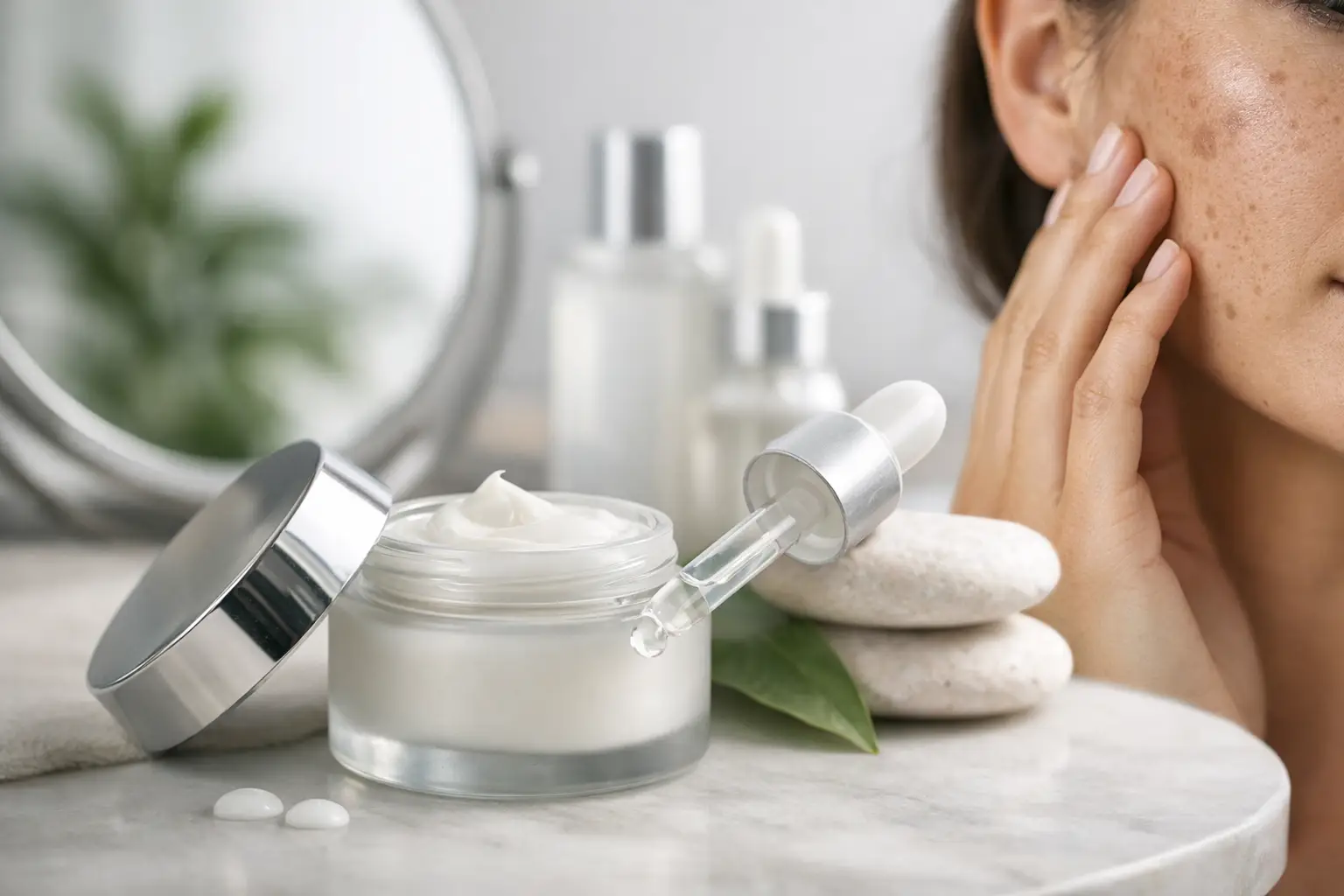

Dark spots can make skin look uneven long after the original issue has passed. A healed blemish, too much sun, hormonal changes or irritation can all leave behind marks that linger for weeks or even months. The right dark spot corrector can help fade visible pigmentation, brighten dull areas and support a more even-looking complexion, but results depend on choosing the right formula for your skin and using it consistently.
For most shoppers, the challenge is not finding a product labelled for dark spots. It is working out which one is actually worth adding to a routine. With so many brightening creams, serums and treatments across mass and premium skincare, it helps to know what to look for before you buy.
What a dark spot corrector is designed to do
A dark spot corrector is a targeted skincare product formulated to reduce the appearance of hyperpigmentation. That can include post-acne marks, sun spots, age-related discolouration and uneven patches caused by inflammation or friction. Some formulas focus on the face, while others are designed for the body, where tone concerns often show up on the chest, shoulders, elbows, knees or inner thighs.
What matters most is expectation. These products do not erase pigmentation overnight. They work gradually by helping to reduce excess melanin at the surface, encouraging skin renewal, or supporting a brighter overall tone. Some are better for fresh marks. Others are more useful for stubborn pigmentation that has built up over time.
How to choose a dark spot corrector
The best choice depends on your skin concern, your skin type and how active the formula is. If your skin is sensitive, starting with a gentle brightening serum often makes more sense than jumping straight into a strong exfoliating treatment. If your marks are tied to breakouts, you may want a formula that tackles both congestion and post-acne discolouration.
Texture matters too. Serums are often popular because they layer easily into a routine and tend to deliver concentrated actives. Creams can be a better fit if your skin is dry or if you want a treatment that feels more cushioning. For body pigmentation, richer creams and lotions are often the practical option because they cover larger areas more comfortably.
Shoppers also benefit from thinking about routine fit. A product that works beautifully in theory is no use if it is too strong for daily wear, pills under moisturiser or leaves skin feeling tight. Consistency is what gets results, so the best dark spot corrector is often the one you will genuinely use.
Ingredients that deserve your attention
Niacinamide for visible tone correction
Niacinamide is one of the easiest ingredients to build into a routine. It helps improve the look of uneven tone, supports the skin barrier and generally suits a wide range of skin types. If your skin gets easily irritated or you are new to targeted skincare, it is often a smart place to start.
Vitamin C for brightness and glow
Vitamin C is well known for boosting radiance and helping reduce the look of pigmentation caused by sun exposure and dullness. It can make skin look fresher and more luminous, although some forms are more stable and gentle than others. If your skin is reactive, a lower-strength or derivative-based formula may be the better choice.
Acids for skin renewal
Ingredients such as glycolic acid, lactic acid and salicylic acid can help speed up surface cell turnover, which improves the appearance of marks over time. This can be very effective, especially for post-blemish discolouration, but there is a trade-off. Overuse can trigger irritation, and irritation can make pigmentation look worse, particularly in deeper skin tones.
Targeted brightening actives
Ingredients such as azelaic acid, tranexamic acid, alpha arbutin and liquorice root are often found in products designed specifically for dark spots and uneven tone. These can be especially useful if you want a more focused treatment without relying only on exfoliation. They tend to work best with patience and regular use.
Why sunscreen matters more than most treatments
You can invest in a premium dark spot corrector, but if you skip sunscreen, progress is usually slower. UV exposure can deepen existing pigmentation and make fresh marks hang around much longer. Even on cloudy days, unprotected skin is more likely to hold onto uneven tone.
That does not mean every routine needs to be complicated. It means that brightening products and daily SPF should work as a pair. If fading spots is the goal, sunscreen is not the extra step. It is part of the treatment plan.
Building a routine that supports better results
A strong routine does not need ten products. In many cases, a gentle cleanser, your chosen treatment, a moisturiser and daily SPF are enough. If you are using a dark spot corrector with active ingredients, introducing it slowly can help your skin adjust and lower the risk of irritation.
In the morning, many people do well with a vitamin C or niacinamide-based product followed by moisturiser and sunscreen. In the evening, you might use a more treatment-focused serum or cream with acids or other corrective ingredients. If you are already using retinol, benzoyl peroxide or exfoliating acids, be careful about combining too much at once. More is not always better.
This is where product choice becomes personal. Someone with dry, dull skin may prefer a cream-based brightening treatment and a richer moisturiser. Someone dealing with oily, blemish-prone skin may lean towards lightweight serums with niacinamide, salicylic acid or azelaic acid. The goal is visible improvement without throwing your skin off balance.
Face versus body pigmentation
Not all dark spots show up on the face. Many shoppers also want help with body discolouration, whether that is on the arms, legs, back, underarms or intimate outer areas. Body skin can often tolerate richer formulas, but it can still react if the product is too harsh.
A face serum is not always practical for larger areas, which is why body creams and tone-correcting lotions remain popular. They offer more coverage and often fit better into a daily routine after showering. If the pigmentation is linked to shaving, friction or dryness, keeping the area moisturised matters just as much as using a brightening treatment.
How long does a dark spot corrector take to work?
This is where expectations need to stay realistic. Fresh post-acne marks may begin to look better within a few weeks, especially if your routine is consistent and your skin is protected from the sun. Older pigmentation usually takes longer. In many cases, visible improvement takes between eight and twelve weeks, sometimes more.
The timeline also depends on what caused the spots in the first place. Hormonal pigmentation, deeper marks and long-standing sun damage can be more stubborn than surface-level discolouration. If a product promises dramatic overnight change, it is usually marketing talking louder than skincare science.
Common mistakes that slow progress
One of the biggest mistakes is switching products too quickly. Skin brightening takes time, and constantly replacing your treatment makes it hard to know what is helping. Another is using strong acids too often, which can lead to irritation, flaking and more visible uneven tone.
Skipping moisturiser can also be a problem. A healthy skin barrier supports better tolerance and better results. And of course, inconsistent SPF use remains the reason many dark spot routines underperform.
Finding the right option for your budget
You do not need the most expensive formula to get good results. Trusted skincare brands across different price points offer effective dark spot treatments with proven ingredients, and that makes it easier to shop based on your skin’s needs rather than price alone. Some people prefer dermatologist-recognised skincare for reassurance. Others want specialist brightening ranges that target visible tone correction more directly.
The good news is that quality options exist across everyday and premium beauty. That is especially helpful if you are balancing a full routine, stocking up on essentials or shopping for both face and body care at the same time. A retailer with a broad skincare range makes comparison simpler, whether you are replenishing a favourite or trying something more targeted for the first time.
When to get extra advice
If your pigmentation is changing shape, becoming raised, itching, bleeding or not behaving like an ordinary dark mark, it is worth speaking to a GP or dermatologist. The same applies if you have tried multiple products for several months with no change at all. Skincare can do a lot, but not every concern should be handled through trial and error.
Choosing a dark spot corrector should feel less like guesswork and more like smart shopping. Start with your skin concern, look for ingredients that match it, and give the product enough time to do its job. Visible results tend to come from consistency, not extremes, and a steady routine can do far more for your glow than a crowded shelf ever will.